VREC Holistic Design for Learning
By John Castle
Students developing a grant to make improvements to a school nature trail. Students paddling the Black River to conduct a water study and river clean up. Students creating and taking responsibility for a school composting effort. Students, staff, and community partners designing a community garden.
TheVermont Rural Education Collaborative (VREC) champions a holistic approach to learning to inspire rural school communities and their students to learn, share, and thrive. Rather than limiting education to standardized tests and traditional classrooms, VREC promotes integrated place-based learning, student voice and choice, and robust community-school partnerships to nurture the whole child.
By honoring the unique strengths of rural communities and vast natural resources, where local communities and natural landscapes are extended classrooms, rural education does not mean limited education. Instead, it offers a rich environment where students expand their boundaries while staying deeply rooted in their community.
Holistic learning is an educational philosophy that focuses on developing all aspects of a person, rather than exclusively their academic or intellectual capabilities. It views the learner as multi-dimensional and recognizes that growth happens through relationships with others, the local community, and the natural world. The core goal is to cultivate well-rounded, resilient, and self-aware individuals who understand their place in society and can live balanced, purposeful lives.
*See the 5 Dimensions of a Whole Learner below
Cognitive (Mind): Intellectual development, critical thinking, problem-solving, and academic competencies.
Emotional (Heart): Self-awareness, emotional regulation, resilience, and developing a positive self-image.
Physical (Body): Health, physical movement, sensory coordination, and understanding the mind-body connection.
Social (Community): Empathy, teamwork, communication, and a sense of civic or global responsibility.
Spiritual (Meaning): Finding personal purpose, connection to nature, ethical grounding, and a sense of wonder (non-religious).
Core Pillars of Holistic Pedagogy
Holistic educators structure their classrooms around specific teaching practices:
Experiential Learning: Learning by doing, making, exploring, and failing in safe, project-based learning with real-world relevance.
Interdisciplinary Curriculum: Breaking down traditional subjects (like language arts, science, & history) to teach them as integrated, thematic concepts.
Place-Based Connections: Utilizing the local environment, economy, and culture as a primary learning resource.
Inner Reflection: Allocating time for journaling, mindfulness, self-assessment, and quiet thought.
Collaborative Relationships: Prioritizing strong, safe student-teacher relationships and peer-to-peer cooperation over competition. Students are leaders of their own learning.
Holistic learning begins by anchoring the curriculum in what is familiar and accessible to our students. Our regional environment, history, and economy are vibrant learning laboratories. The goal is supporting students to see themselves as active caretakers of their communities by shifting classroom-bound work to local field studies and blending academic standards with real-world relevance. Turn a lesson on ecology into a water-testing expedition on a stream that runs through town, or turn a history lesson into an oral history project with local residents. A holistic approach honors the whole child by trusting their agency and moving from engagement to ownership. When we give students a say in their education, we build their civic confidence early.
*See Traditional vs Holistic Education below
| Feature | Traditional Education | Holistic Education |
|---|---|---|
| Primary Goal | Academic mastery and test scores | Development of the whole person |
| Learner's Role | Passive consumer of information | Active explorer and agent of change |
| Teacher's Role | Instructor and authority figure | Facilitator, mentor and co-learner |
| Environment | Desks, lectures and indoor classrooms | Flexible spaces, outdoors and community hubs |
| Assessment | Standardized testing and numeric grades | Portfolios, self-reflection and growth tracking |
Cultivating the Whole Student Through Action
VREC actively promotes holistic learning opportunities by supporting a variety of experiential learning opportunities:
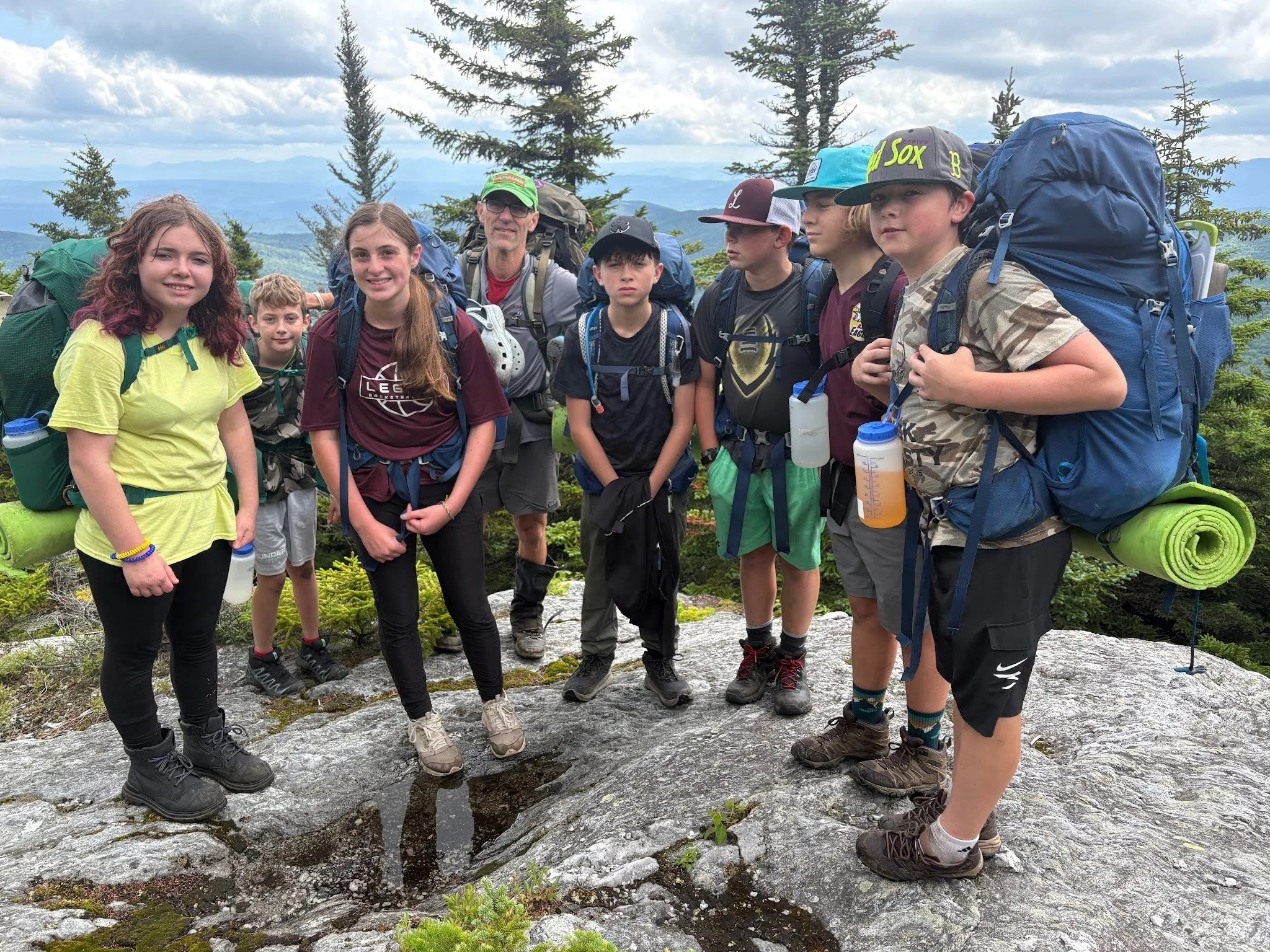
Expeditionary Field Studies:
Middle schoolers participate in multi-day, adventure-based journeys. Students backpack the Long Trail, White Mountains, or Appalachian Trail in Maine, or paddle the upper Connecticut River to study local ecology, history, and culture of the region.
Students hike the Long Trail on an Expeditionary Field Studies backpacking trip.
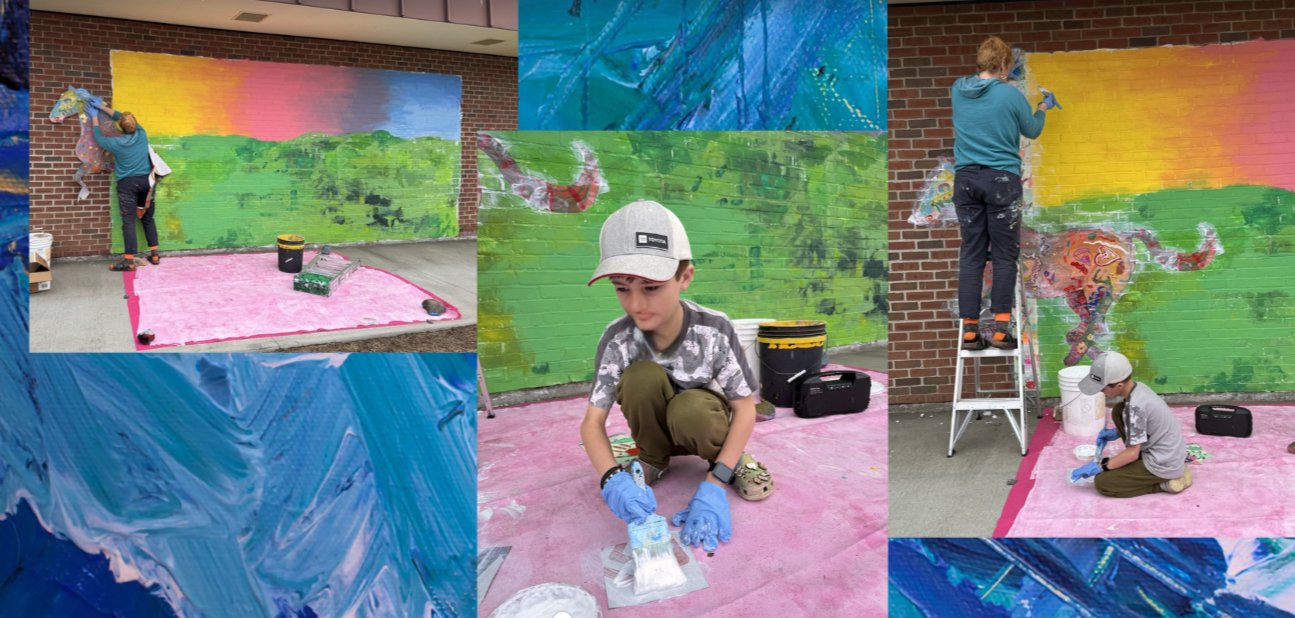
Student-Led Mini-Grants:
Students pitch grant ideas to peers for feedback, write the grants, conduct related activities and then present real-world community impact projects at the VREC Annual Celebration of Learning. These student-led initiatives build civic engagement and youth voice.
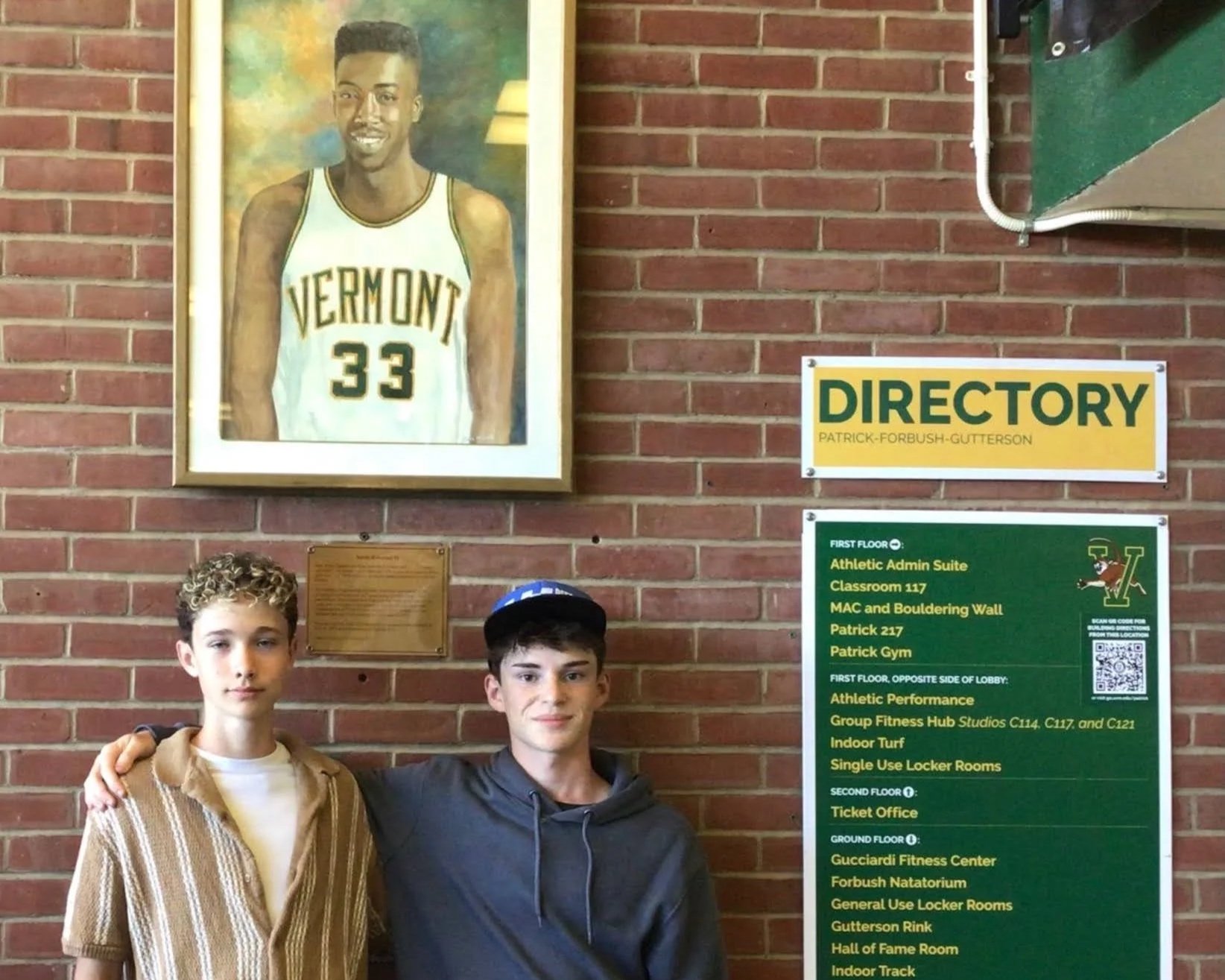
The A.I.M. Program:
The Aspire-Imagine-Motivate initiative provides middle school students the opportunity to explore post-secondary pathways and to visit college campuses. It plants seeds for future consideration of extending their education beyond secondary school as pathways to careers.
Students explore the UVM campus during an A.I.M. visit.
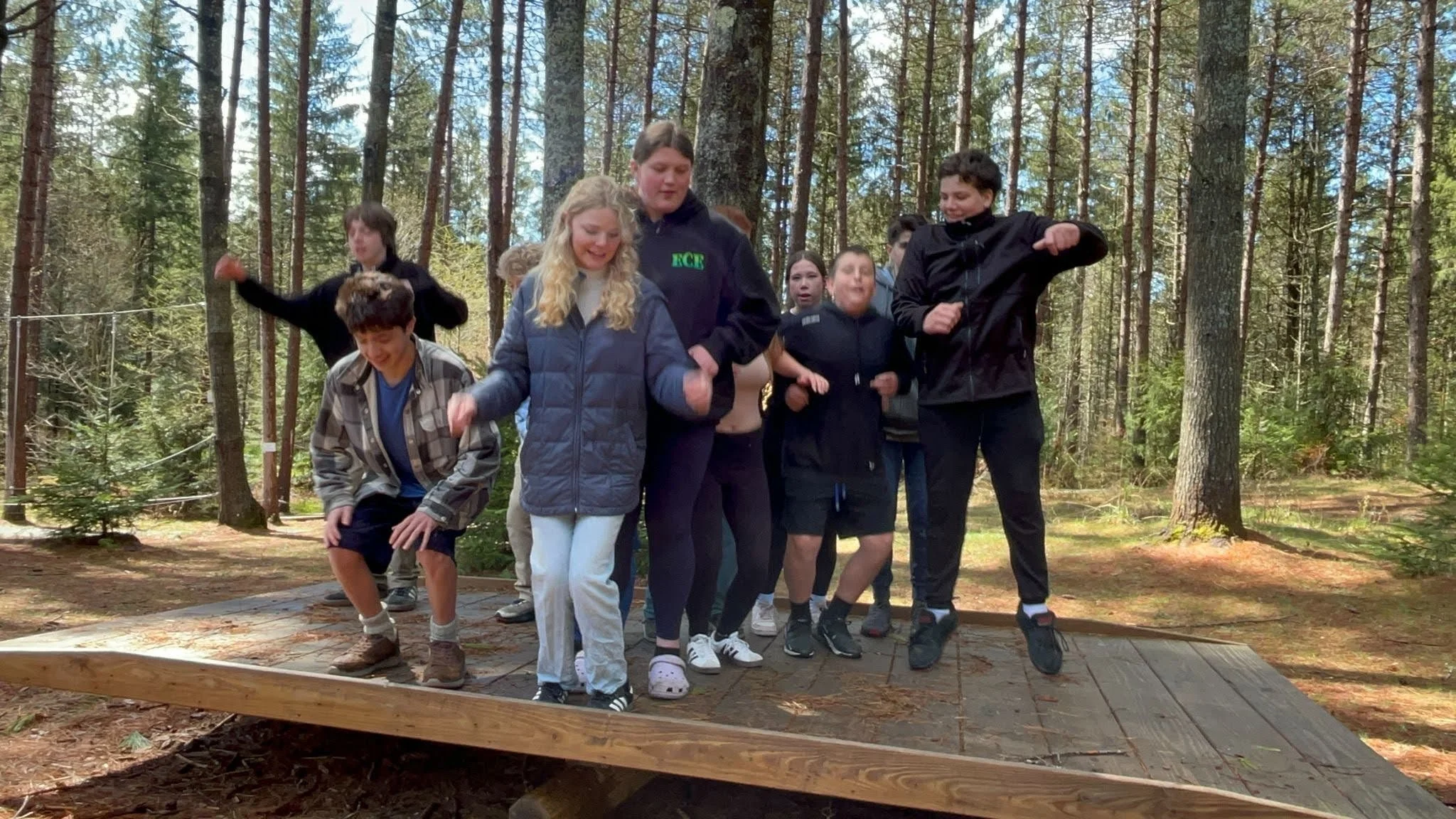
8th Grade Transition Days:
In partnership with the Northwoods Stewardship Center, students engage in group challenges and learn about navigating transitions and build the skills and resilience to grow from changes in high school and in life.
Students from practice teamwork at the Northwoods on an 8th grade Transition Day
Supporting a Holistic Educator Ecosystem
A holistic student experience requires a well-supported educator ecosystem. VREC supports educators to have the tools they need through a wide range of professional learning opportunities. VREC treats professional development as a space for genuine reflection, restoration, and creative collaboration. We build a resilient peer network through communities of practice or other convenings, such as our Place-Based Learning Seminar and the Outdoor Education Conference & Celebration. We host a Teacher Reflection and Rejuvenation Retreat where educators ground themselves through peer connection and time in nature. Book studies, science, math, and social studies courses, and Educator Licensing Pathways are provided across the region. We created a STEAM Integration Fellowship where teachers co-learn alongside middle school students, using maker spaces and team design challenges. All designed and delivered to meet the needs and interests of the field.
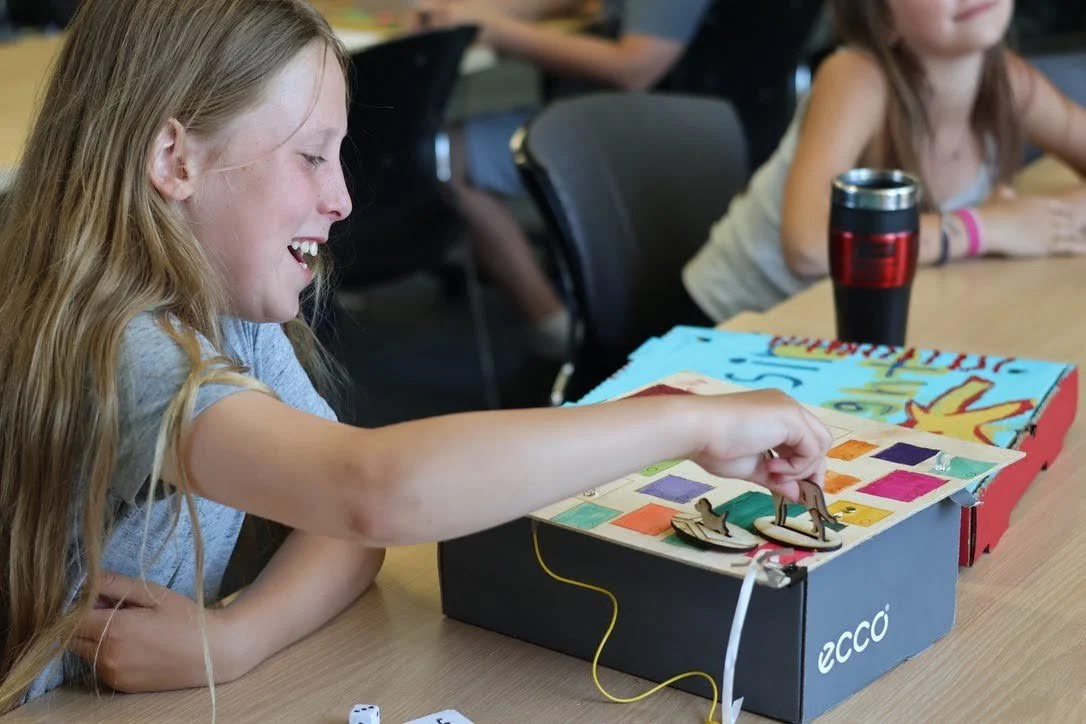
Teaching in a rural context requires a distinct approach. Our schools are the heartbeats of our towns. Our unique geography offers vast opportunities to break down classroom walls. Education is not merely a series of isolated academic benchmarks, but a deeply connected ecosystem.
A Newport City student creates alongside VREC STEAM Fellowship educators.
The Community Schools: A Systemic Approach to Holistic Education
Our schools are truly community schools where the interdependent relationship between school and community is essential. By looking at the systemic needs and interests of our students, families, and educators through a community schools lens, we strategically create an environment that naturally approaches the full scope of development in a holistic way. VREC has actively supported Community Schools initiatives of: Integrated Student Supports; Expanded and Enriched Learning Time and Opportunities; Active Family and Community Engagement; Collaborative Leadership Practices; and Safe, Inclusive, and Equitable Learning Environments. VREC has a strong partnership with the Catamount Community Schools Collaborativeand actively advocates for the expansion of Community Schools throughout Vermont.
By embracing this interconnected approach, we show that rural education is an asset and not a deficit. We foster school-communities where both students and educators deeply root themselves, connect, and thrive.
VREC’s commitment to a holistic design for learning comes from a collective vision and voice of our schools and is an important component of our new Strategic Design. We welcome input and ideas on how we can best foster a holistic education for our students.
Ron Berger: The Gold Standard for Holistic Education
The work of Ron Berger is the gold standard for a holistic model for education with Leaders of Their Own Learning being a seminal text for those who wish to promote a holistic approach to learning. Join us for a day with Ron on Sept. 24!
Learn more: